
Are We Entering a New Golden Age in Superbike?
What is a Golden Age? According to the Merriam-Webster dictionary it is defined as a period of great happiness, prosperity, and achievement. The golden age of American railroads is generally considered to be from the 1880s to the 1920s. Many historians point to the golden age of baseball as being from the 1920-1950s is another example.
Can that term even apply to Superbikes, a class of racing that has only been around for 50 years? It can if you ask Google, and I know I’m not alone in asking Google a random question while procrastinating from something else that is probably far more important.
Google defines Superbikes into three separate eras; the first is “The Genesis” from the late 1960s with the introduction of the Honda CB750 into the first few initial seasons of the AMA Superbike Championship that started in 1976.
From there Google defines a second era as “The Blueprint” that covered the 1980s as Superbikes developed into a clear and defined class that spawned the Superbike World Championship in 1985 before “The Golden Peak” that covers the 1990s and into the 2000s.
And that is the entirety of the answer that I received. It’s almost as if the most widely used search engine on the planet thinks Superbike racing in North America was just something that ceased as a public sporting event about the same time Youtube was created.
First let's determine what criteria would measure a “Golden Age” in regards to Superbikes racing. We love the unpredictability of not knowing who will win a race before a race starts, so that is one. The same could be said about variety among manufacturers at the front while a third category would be success of American riders on the international level.
For a long time here in North America we definitely didn’t have much variety at the front. There was the dominance of the Yoshimura Suzuki team winning 10 of 11 championships beginning in 1999. That streak was broken by Josh Hayes for Yamaha in 2010 and then the blue bikes won an even more impressive 13 of 14 championships from there.
Even if we look at just the time period that begins with the creation of MotoAmerica through the end of Yamaha’s last championship season in 2023 Yamaha won an impressive 66.5% of all MotoAmerica Superbike races. That is slightly above the 60.33% winning percentage of the Yoshimura Suzuki team from 1999-2009 in AMA Superbike races.
Now, let me be clear, I’m definitely not claiming that all of those seasons were bad. Sometimes the battle between Ben Spies and Mat Mladin was exciting enough on its own. But, sometimes we would also have Jake Gagne just be clearly better than everyone else and win 16 races in a row.
Where would you put today if you had the power to edit Google’s original response? I’m not completely sure, and that’s mainly a good thing.
Outside of asking Google random questions, I did do some research of my own. My initial two-part question was a simple one: What season had the highest number of different riders win a race in a season and when did that happen?
The answer is seven different riders and it has happened twice. The first was in 1977 when Reg Pridmore, Cook Neilson, Steve McLaughlin, Mike Baldwin, Ron Pierce, Paul Ritter and Wes Cooley all won races in the second season of the official AMA Superbike Championship.
The other? Well, that was the 2024 MotoAmerica Superbike season. During that season races were won by Cameron Beaubier, Bobby Fong, Jake Gagne, Cameron Petersen, Sean Dylan Kelly and Loris Baz in addition to the championship winner Josh Herrin.
In 2025 that was backed up by having four different riders win a race, with three of those four winning six races each. The end result was one of the most exciting final weekends of the Superbike championship that I can remember.
While Yamaha won six championships in a row beginning in 2018, the final year of that run in 2023 produced five different winners when Cameron Beaubier, Josh Herrin, PJ Jacobsen and JD Beach won races in addition to the champion Jake Gagne.
What other seasons in the history of the AMA Superbike Championship produced five different winners? Well, those would be 1989, 1990 and 1996; all years that are firmly within Google’s window of “The Golden Peak”.
Are We In the Golden Age Now?
This is a question that really can only be judged in hindsight, so time will need to pass before any definite answers can be made. I don’t think it is unreasonable to ask the question, however, and that says something in itself. We have already established that in terms of variation in race winners Superbike racing under MotoAmerica has recently matched the previous highs reached under the AMA’s direction.
How are we doing today when it comes to the competition among manufacturers in the top class?
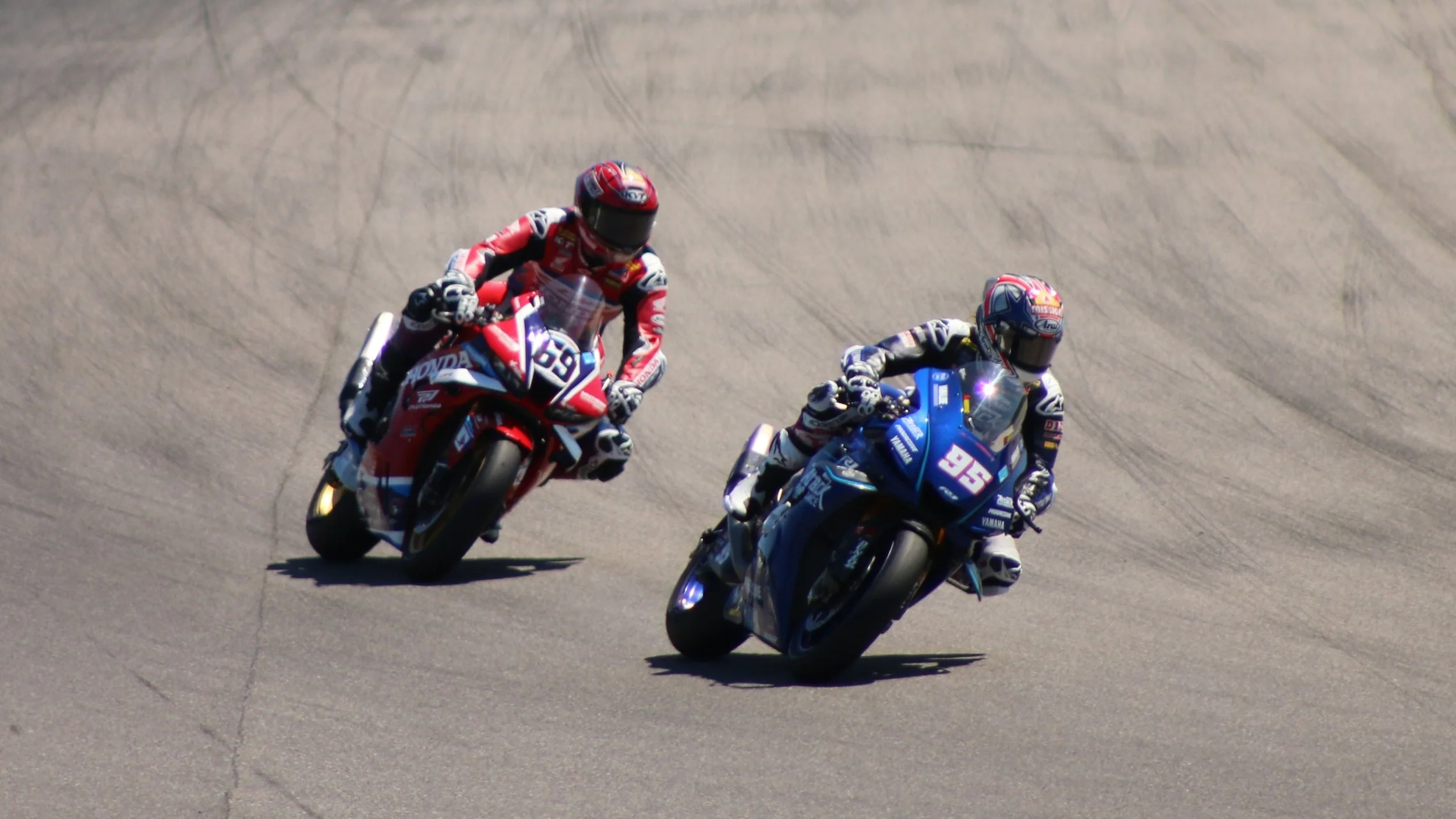
Hayden Gillim is trying to help bring Honda back to the front and compete against championship contender JD Beach.
Since 2023 MotoAmerica has had three different manufacturers win at least one race every year and each of those manufacturers has had one rider earn a season championship as well since then. Jake Gagne won for Yamaha in 2023, Josh Herrin won the 2024 championship on a Ducati and last year's title was earned by Cameron Beaubier on a BMW.
While that is an impressive recent distribution, the season where the most different manufacturers won a race was the same 1977 season that is tied for the most riders winning a race. In that season Ducati, Kawasaki, BMW, Moto Guzzi and Suzuki each won races to make five different manufacturers on the top step on the podium.
The first half of the 1990s are seemingly tied for second place with four different manufacturers. 1989, 1990, 1992 and 1996 are seasons that had four manufacturers win a race, although it should be pointed out that different manufacturers are included in that group depending on the year.
The highpoint in manufacturer involvement might have been 1997. On December 3rd, 1996 Cycle News published a list labeled as the “current factory team roster for the 1997 AMA Superbike National Championship” and it included eight teams from six manufacturers!
The big four from Japan were represented as Honda, Kawasaki, Suzuki and Yamaha had at least one team (Honda had two!) and they were joined not only by dueling Ducati factory-backed campaigns by Fast by Ferracci and Vance and Hines, but also a two-bike factory supported Harley Davidson VR1000 program that was reaching the end of it’s lifespan.
Today we aren’t close to that kind of commitment from the manufacturers that produce the motorcycles of the Superbike class, but I think it’s best said MotoAmerica is worlds ahead as a whole than their first few years of managing the Superbike National Championship. Five Manufacturers maintain a relationship to have at least one Superbike that is factory-supported at some level.
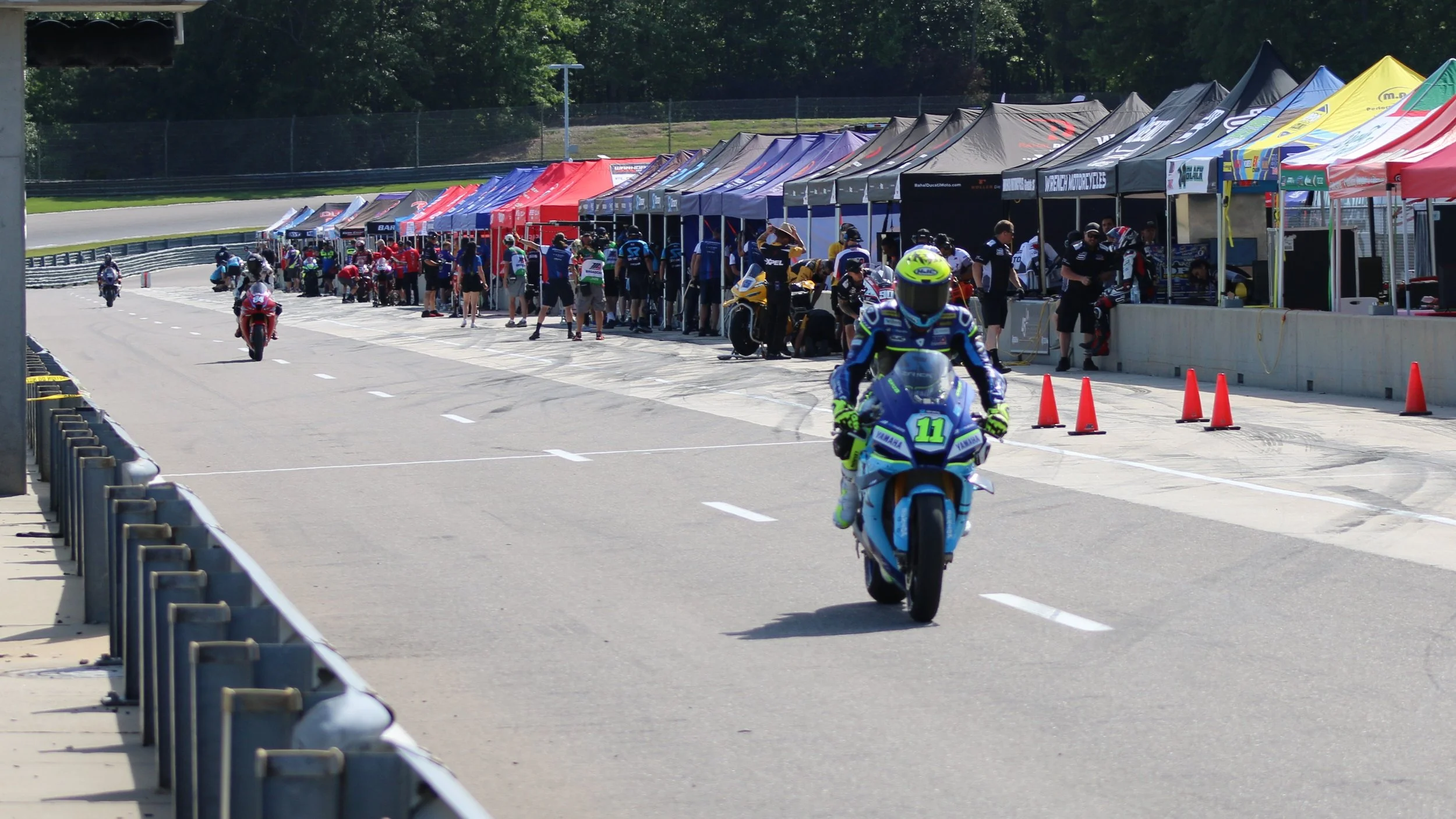
Mathew Scholtz on the Strack Racing Yamaha R1 at Barber Motorsports Park.
While Strack Racing performs like a factory-backed racing team, Yamaha explicitly calls Attack Performance Progressive Yamaha their official Superbike team. That is a role they have now fulfilled for the seven seasons.
BMW changed their arrangement in MotoAmerica significantly before the 2026 season, specifically identifying the two-bike program at Orange Cat Racing as a “BMW Motorrad Motorsport Official Team”. Previously, the lone M1000RR that was piloted by Cameron Beaubier to the championship last season was the only real effort that had involvement of the Germany-based alpha Racing GmbH; none of the teammates Beaubier had in prior seasons had the same support.
This year, both BMW M1000RRs piloted by Sean Dylan Kelly and Jayson Uribe are full factory-supported efforts.
Ducati also has a factory presence with the Warhorse HSBK Ducati Flo4Law team’s two Panigale V4Rs; one each for Cameron Beaubier and Benjamin Smith. This team also previously ran two bikes during the 2023 season where Josh Herrin and Loris Baz both won races for the team, but more often than not the team had previously been a single bike effort.
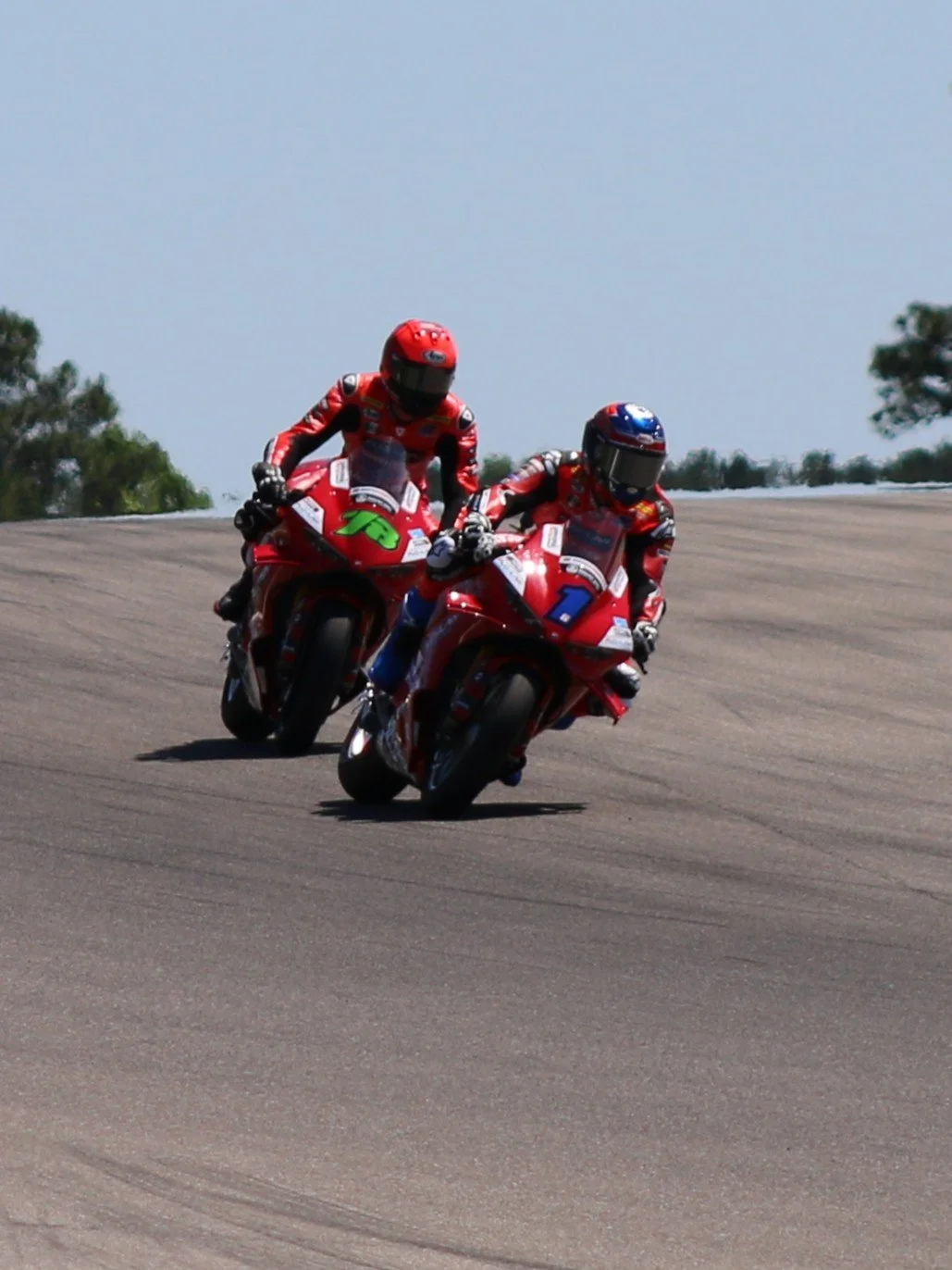
This year the factory-supported Warhorse HSBK Ducati with Flo4Law team returned to a two-bike program for the first time since 2023.
This season, not only is the Ducati team making a second run as a two-bike effort there are signs that it is going to stay at that level for the foreseeable future on top of the separate but ultra-proffessional Rahal Ducati Moto two bike effort that is already in the works for 2027.
Suzuki, the once dominant brand in the Superbike championship here in the United States, still has a factory presence with a two bike effort here in MotoAmerica. The one brand that was able to claim the title in 2017 with Tony Elias despite being in the thick of Yamaha’s dominance hasn’t had a lot to brag about over the last few seasons, but signs there are pointing to a change.
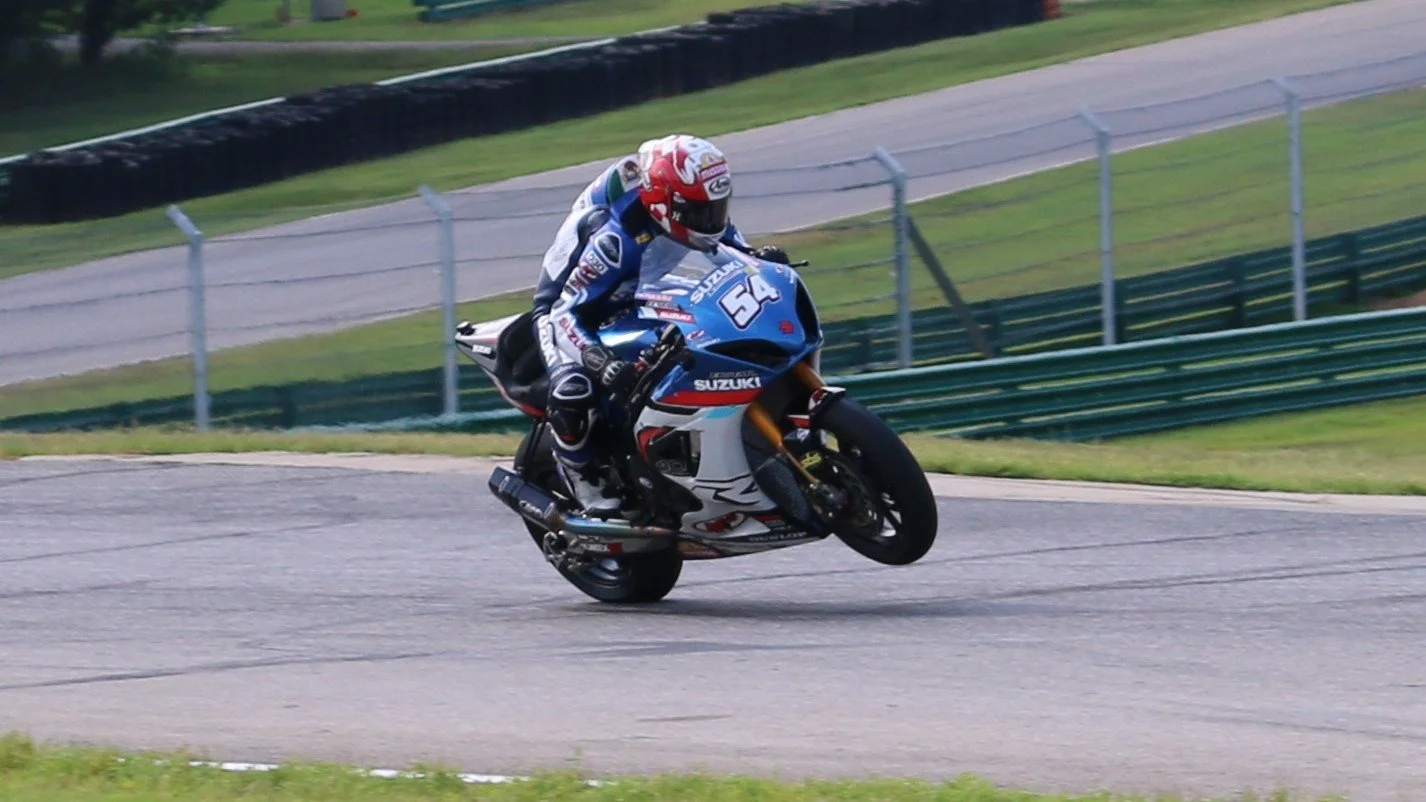
Richie Escalante on the M4 Ecstart Suzuki GSX-1000R at Virginia International Raceway. In 2027 the team will have a new model of the machine to compete with.
A trend that has emerged at the top of motorcycle road racing is the same one that revolutionized auto racing around 50 years ago: wings. Creating more opportunity to use the flow of air around the motorcycle has transitioned from the simplistic view of making the bike and rider as slippery as possible so they could cut through the air, to the present day practice of designing the motorcycle to use that airflow to keep the bike planted to the racing surface with superhuman-levels of grip under braking and cornering.
Ducati was the first manufacturer to bring a bike equipped with wings to MotoAmerica and BMW followed when they transitioned from the S to the M model of their literbike. Suddenly the Yamaha R1, once considered the ultimate scalpel for cutting up a race track here in the US a couple years ago, was having trouble keeping up with the new bikes from Europe.
Honda was the first of the Japanese bikes to make an appearance in MotoAmerica with wings. Hayden Gillim won the Stock 1000 championship in 2024 on a CBR1000RR-R Fireblade SP when the single wing brand decided to make inroads back into North America’s highest motorcycle road racing championship. The following season in 2025 Gillim ceased competing in the Stock 1000 category to continue the development of that motorcycle into a full Superbike program.
Yamaha responded with a new winged R1 to start the 2025 MotoAmerica Superbike championship. Right out of the bat it was able to take the fight back to Ducati and BMW as Yamaha won the most races that season. Bobby Fong tied for the most race victories that year while narrowly missing out on the season championship in the new model’s first season.
Suzuki has taken all of this to heart as well. The factory supported M4 Ecstar Suzuki Team that fields a two-bike program for the brand easily has the oldest starting point in which to build their competitors from. In one way that can be beneficial; this is also easily the most developed motorcycle with more data than anything else in the field. It’s not even close, either; there are no surprises left to be found on this machine.
For 2027 Suzuki will have a completely new and updated motorcycle for the first time in years. And yes, it will have wings. But it will also have updated geometry to take advantage of that wealth of data that has been collected over the years to go with not only more power but with improved electronics to transmit all that power to the ground.
My verdict, if Suzuki and Honda are able to close that gap down to the front (and Honda is already getting closer) then we will be back in a spot where five different manufacturers are vying for the top spot on the podium again.
Us Against the World
This is where a comparison of eras doesn’t look to be in today’s favor. Nobody is born fully equipped and ready to compete at the international level when it comes to motorcycle road racing. Racers are developed over time by working their way up through junior ranks against the toughest competition they can find.
It is this sort of development ladder that was completely missing for a period of time in US road racing. To put it bluntly; the talent didn’t disappear, we stopped developing it with the same resources.
I don’t need to spell out the sucess that American riders have found in the past with plenty of MotoGP and Grand Prix World Champioships to pick from as examples. Americans haven’t had as much sucess in the Superbike World Championship, however the most recent American to earn an international number one plate was Ben Spies when he won that title for Yamaha in 2009.
Today we have a confluence of three factors that is dramatically improving the quality and depth of competition not only throughout Superbike but MotoAmerica as a whole.
The first is that MotoAmerica as an organization established a solid footing for rider developement with the longstanding Junior Class that gave the best young riders from all over the country the chance to compete against each other. Expanding into the operation of the Mini Cup National Championship in a partnership with Corey Texter has been another boon in streamlining the preparation and opportunities for young riders to enter serious competition.
In addition to that, American riders that didn’t experience success on the international stage they were hoping to find are starting to come home. I still count Cameron Beaubier in this group and use his return to MotoAmerica in 2023 as the beginning date for this era of competitiveness in Superbike. While Yamaha still employed the season champion at the end of the year in Jake Gagne, that was the first time in a while it wasn’t a foregone conclusion before the year started that a blue bike would be on top of the standings at year’s end.
The third thing is riders from other countries want to be here again. We may not be sophisticated enough for Danillo Patrucci, but former MotoGP and World Superbike competitor Loris Baz wants to be here. Micheal van der Mark, test rider of the BMW factory team has openly stated his desire to come compete in MotoAmerica and it seems every year another MotoGP or Superbike World Championship rider or two adds their name to the list interested in competing in North America’s premier championship.
Another former MotoGP and Moto2 rider in Darryn Binder made to decision to sign up for a full season without even competing in the top class. Binder is currently battling another former Moto2 rider and two-time American Superbike champion Josh Herrin for the Supersport title.
You see, while this is something that can only be evaluated in hindsight it is hard to believe we are not doing a whole lot of things right when it comes to preparing our young riders when you compile those factors together. As this influx of top level talent comes to our series we have such depth that Superbike-level guys are having to compete in Supersport. In that class they are now meeting head on with the results of a clear development pipeline producing riders like former Junior Cup champion Tyler Scott or race winner Kayla Yaakov.
Is everything great? Of course not. Is the current Talent Cup the answer we want it to be? I’m not sure, but I am also not sure just going back to Junior Cup is the answer, either.
This will always be a process that will need continual tweaking in order to continue to operate effectively. Even if we aren’t in a “Golden Age” today, I personally feel like 10 years of operation under MotoAmerica’s management has given me the belief that we are at least on our way there.
